Training & Certifications
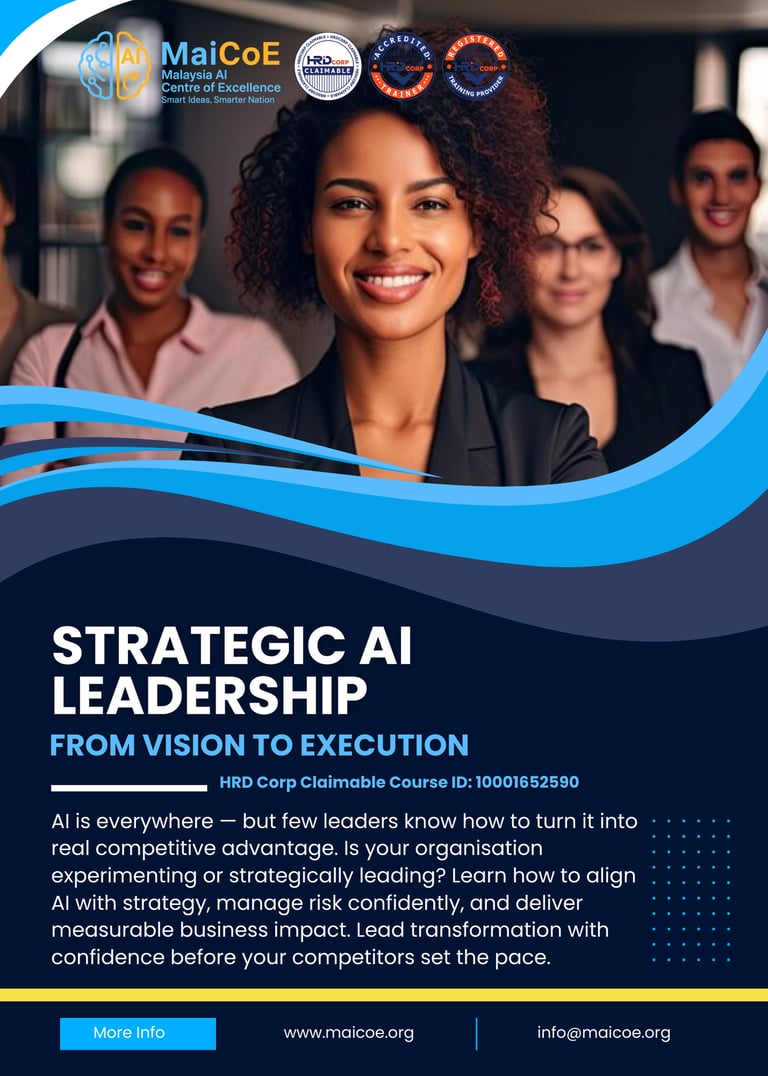
Strategic AI Leadership: From Vision to Execution
This two-day executive programme is designed to equip CEOs, CIOs, CTOs, CFOs, Board Members, Heads of Strategy, and Digital Transformation Leaders with the strategic insight and practical tools required to lead AI adoption at an organizational level. It focuses on transforming AI from a conceptual vision into executable initiatives that deliver measurable business value. Participants will learn how to align AI capabilities with organizational strategy, assess readiness across people, processes, data, and technology, and prioritize high-impact use cases. The programme also emphasizes governance, risk management, and ethical considerations to ensure responsible AI adoption. Through real-world case studies and guided exercises, participants will develop actionable AI roadmaps tailored to their organisations. By the end of the programme, leaders will be able to confidently guide AI investments, manage organizational change, and drive AI-enabled transformation initiatives that enhance competitiveness and long-term performance.
Why This Course Is Worth Taking
Transforms AI from experimentation into real business impact and competitive advantage
Designed for leaders—no technical or coding background required
Provides practical frameworks, case studies, and a capstone AI roadmap
Strengthens governance, risk management, and ethical AI adoption
Enables better strategic investment and decision-making in AI initiatives
Delivered by accredited trainers and AI experts, validated by industry experts and endorsed by HRD Corp
Healthcare & Life Sciences: Machine Learning for Predictive Healthcare
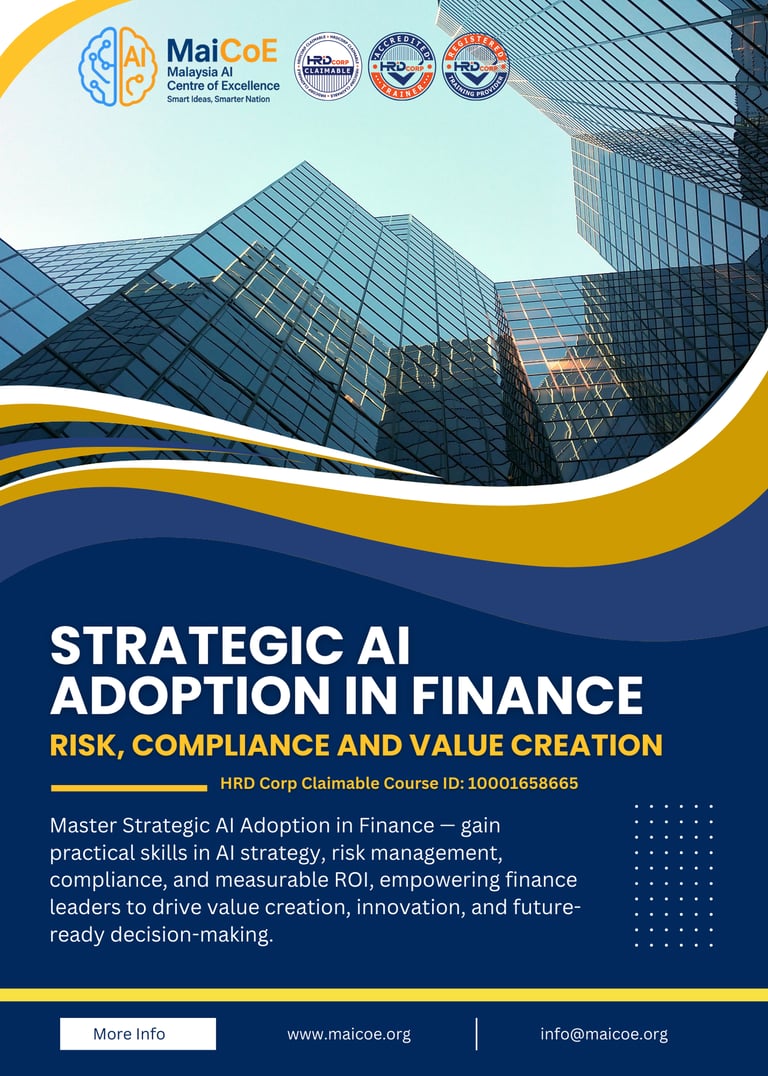
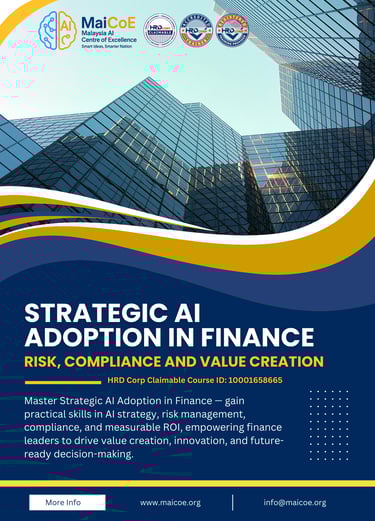
This two-day specialised programme is designed for CFOs, Finance Directors, Risk Managers, Compliance Officers, Internal Auditors, and Financial Strategy Leaders who aim to leverage AI while maintaining strong governance and regulatory compliance. It focuses on applying AI in financial operations such as forecasting, fraud detection, risk assessment, and performance optimization. Participants will learn how to evaluate AI investments, measure financial returns, and ensure alignment with regulatory requirements and organizational policies. The programme emphasises balancing innovation with accountability by integrating risk management, compliance frameworks, and ethical considerations into AI strategies. Through practical case studies and structured frameworks, participants will gain the ability to identify high-value AI opportunities in finance and manage associated risks effectively. By the end of the course, finance professionals will be equipped to drive value creation and lead AI initiatives confidently within a regulated financial environment.
Why This Course Is Worth Taking
Tailored for finance professionals managing risk, compliance, and strategy
Enables AI-driven improvements in fraud detection, credit assessment, and forecasting
Balances innovation with regulatory and governance requirements
Provides practical frameworks for value creation and ROI measurement
Supports development of finance-specific AI roadmaps and implementation plans
Delivered by accredited trainers and AI experts, validated by industry experts and endorsed by HRD Corp
AI-Powered Analytics for Intelligent Decision-Making
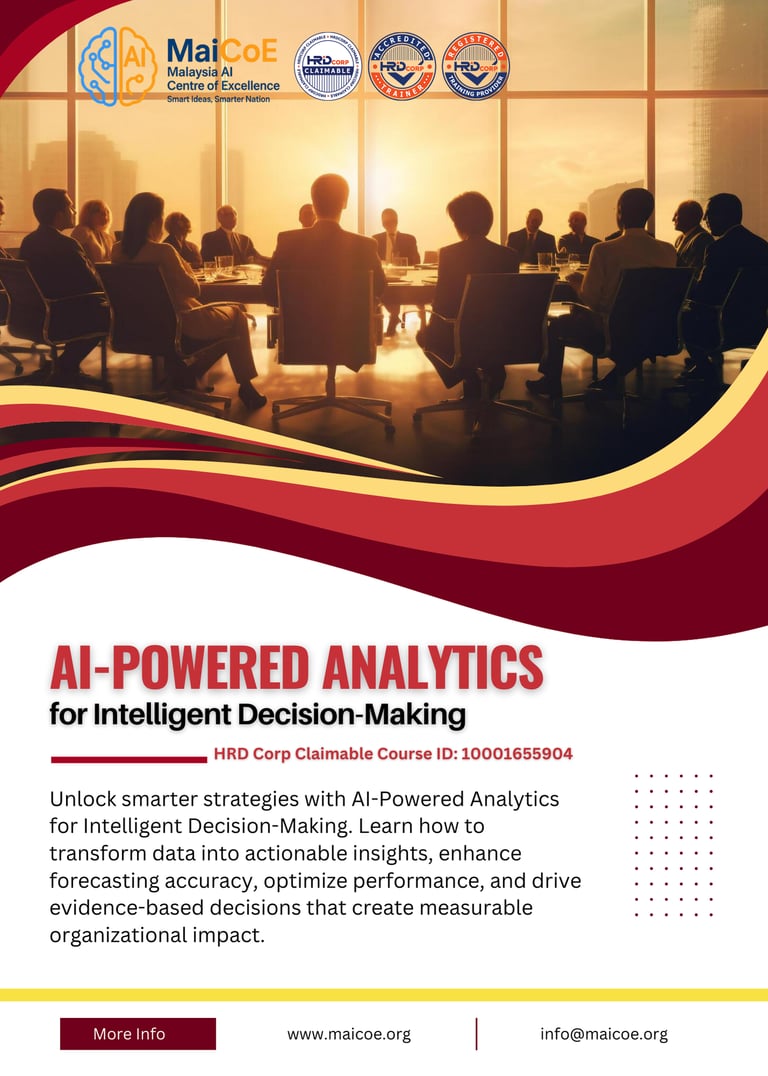
This two-day executive programme is tailored for Business Managers, Strategy Managers, Risk Managers, Policy Makers, Heads of Department, and Senior Executives involved in planning and operational decision-making. It empowers participants to leverage AI-powered analytics to enhance the quality, speed, and reliability of decisions. The programme focuses on how machine learning and data-driven models transform large volumes of data into actionable insights for forecasting, prioritisation, and risk assessment. Participants will gain a clear understanding of decision intelligence and how AI supports both strategic and operational decisions while maintaining transparency and accountability. Through case studies and simulations, they will learn how to evaluate AI outputs, recognise limitations and bias, and apply governance principles. By the end of the programme, participants will be able to drive evidence-based decision-making and confidently oversee AI-enabled decision systems within their organisations.
Why This Course Is Worth Taking
Enhances decision quality using data-driven, AI-powered insights
Helps leaders understand where AI adds value and where risks exist
Improves forecasting accuracy, prioritisation, and risk evaluation
Strengthens governance, explainability, and accountability in AI decisions
Builds confidence in overseeing AI initiatives at executive and board levels
Delivered by accredited trainers and AI experts, validated by industry experts and endorsed by HRD Corp
Executive AI Leadership Series
A strategic programme designed for senior decision-makers and organizational leaders to lead AI adoption, governance, and digital transformation. It provides practical frameworks and roadmaps to turn AI ambitions into business outcomes. The series includes three focused courses: Strategic AI Leadership (from vision to execution), AI-Powered Analytics for Intelligent Decision-Making, and Strategic AI Adoption in Finance (risk, compliance, and value creation).
AI-Powered Solutions: Machine Learning & Deep Learning for Business and Industry
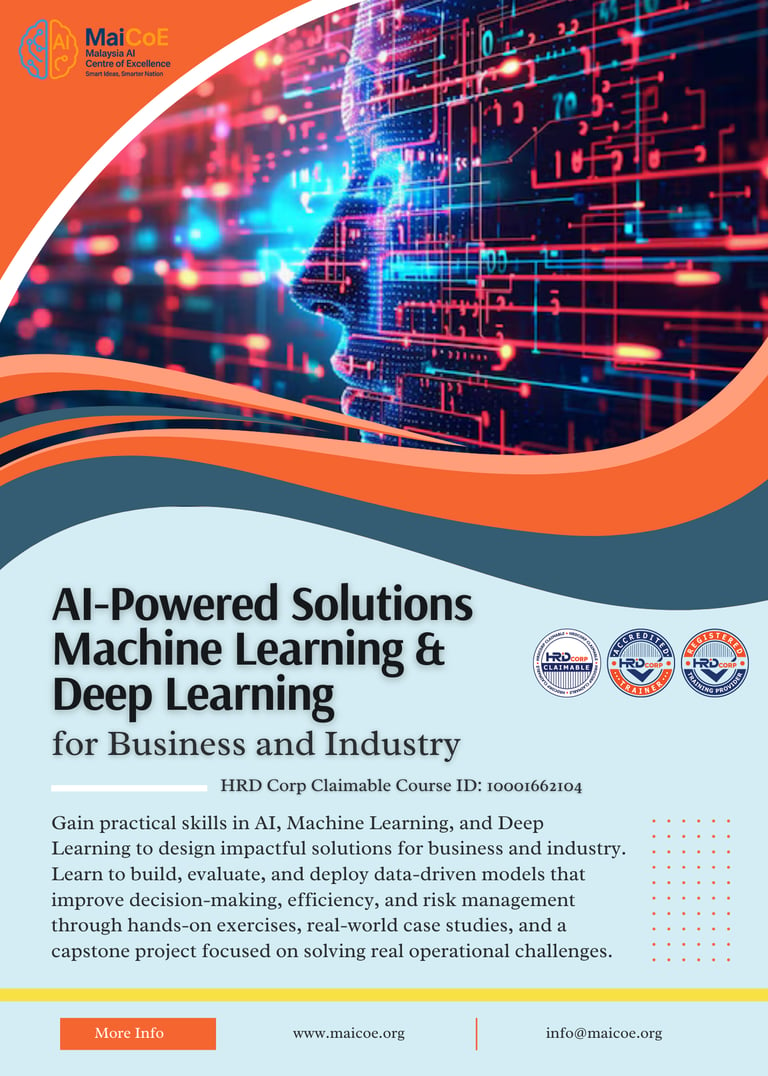
This three-day hands-on programme is designed for AI Engineers, Machine Learning Engineers, Software Developers, Data Analysts, IT Professionals, and Technical Managers who want to build and deploy AI solutions. It provides comprehensive practical skills across the full lifecycle of AI development, from problem definition and data preparation to model development, evaluation, and deployment. Participants will learn key machine learning techniques such as regression, classification, clustering, and anomaly detection, as well as deep learning methods including neural networks and convolutional neural networks. The programme emphasizes real-world application through guided exercises, industry case studies, and a capstone project. Participants will also learn how to evaluate model performance, address issues such as bias and overfitting, and ensure responsible AI implementation. By the end of the course, participants will be able to design and implement AI solutions that improve efficiency, decision-making, and innovation.
Why This Course Is Worth Taking
Provides practical, hands-on experience in building AI models
Covers core ML and DL techniques for real business applications
Enhances ability to solve operational problems using data-driven solutions
Includes real-world case studies and a capstone project
Integrates ethical AI, governance, and deployment readiness
Delivered by accredited trainers and AI experts, validated by industry experts and endorsed by HRD Corp
Applied Cybersecurity with Machine Learning & Secure Cloud
This two-day programme is designed for Cybersecurity Analysts, SOC Engineers, IT Security Managers, Cloud Engineers, DevOps Engineers, Network Engineers, and ICT Professionals transitioning into cybersecurity or AI. It provides a practical and integrated understanding of modern cybersecurity by combining machine learning techniques with secure cloud fundamentals. Participants will explore current cyber threats, attack patterns, and real-world breach scenarios, while learning how AI enhances threat detection through anomaly detection and behavioral analysis. The programme also covers cybersecurity frameworks, regulatory requirements, and secure cloud and IoT architectures, including identity management and encryption. Through practical demonstrations and real-world examples, participants will gain hands-on exposure to AI-driven security techniques. By the end of the course, participants will be equipped to strengthen organisational resilience, improve threat detection capabilities, and safeguard digital infrastructure effectively.
Why This Course Is Worth Taking
Addresses real-world cybersecurity challenges using AI and machine learning
Enhances ability to detect threats, anomalies, and cyber risks proactively
Covers secure cloud, IoT, and modern security frameworks
Combines theory with practical demonstrations and real-world scenarios
Prepares participants for evolving AI-driven cyber threat landscapes
Delivered by accredited trainers and AI experts, validated by industry experts and endorsed by HRD Corp
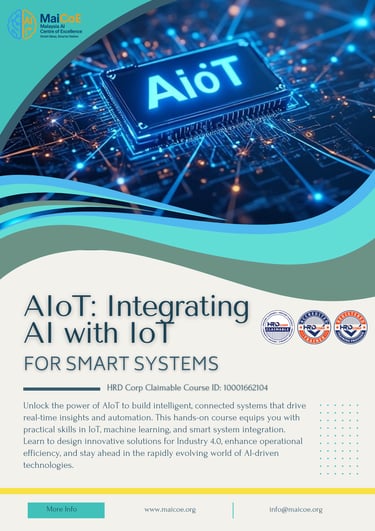
AIoT: Integrating Artificial Intelligence with IoT for Smart Systems
This two-day programme is designed to equip technical professionals and digital innovators with the knowledge and practical skills to integrate Artificial Intelligence (AI) with Internet of Things (IoT) systems to create intelligent, connected solutions. As organisations move towards Industry 4.0 and smart operations, the convergence of AI and IoT—commonly known as AIoT—enables real-time data processing, predictive analytics, and autonomous decision-making across devices and systems.
Participants will explore how IoT devices collect and transmit data, and how machine learning models can be applied to analyse this data for predictive maintenance, anomaly detection, and process optimisation. The programme covers key components such as sensor integration, edge computing, cloud platforms, and AI model deployment within IoT environments. Through hands-on exercises and real-world case studies, participants will learn how to design, build, and implement AIoT solutions that improve efficiency, reduce operational costs, and enhance decision-making across industries such as manufacturing, smart cities, logistics, and healthcare.
Why This Course Is Worth Taking
Addresses real-world challenges using AI and IoT
Enhances ability to generate real-time insights
Covers IoT systems, edge computing, and AI integration
Gain hands-on experience through use cases such as predictive maintenance and smart monitoring
Build capabilities for smart factories, cities, logistics, and digital transformation
Delivered by accredited trainers and AI experts, validated by industry experts and endorsed by HRD Corp
Executive AI Advanced Technology Series
A hands-on technical programme designed for professionals to build, deploy, and secure AI systems. It focuses on practical skills in machine learning, AI solutions, cybersecurity, and integrating AI and IoT. The series includes at least three specialized courses: AI-Powered Solutions: Machine Learning & Deep Learning, Applied Cybersecurity with Machine Learning & Secure Cloud and AIoT: Integrating Artificial Intelligence with IoT for Smart Systems.
Manufacturing & Industry 4.0: Machine Learning for Smart Production
This course is designed for manufacturing managers, process engineers, operations analysts, and industrial automation specialists looking to optimize production and reduce downtime through machine learning. Participants will build core ML skills in predictive maintenance, production quality analytics, and process optimization. They will explore specialized techniques including computer vision for defect detection, time-series forecasting for equipment maintenance scheduling, and reinforcement learning for adaptive process control. Through case studies such as AI-powered quality inspection, predictive supply chain management, and energy-efficient production line optimization, attendees will learn to implement ML models that increase efficiency, reduce costs, and improve product quality in manufacturing.
Day 1 – ML Foundations in Manufacturing
Learn the fundamentals of machine learning in industrial settings, including key data sources such as sensor readings, machine logs, and quality control metrics. Explore predictive maintenance and quality analytics for production optimization.
Day 2 – Advanced Industrial ML Applications
Apply computer vision for defect detection, time-series forecasting for maintenance scheduling, and reinforcement learning for adaptive process control. Build practical models using real-world manufacturing datasets.
Day 3 – Scaling AI Across the Factory Floor
Examine case studies in AI-powered quality inspection, predictive supply chain management, and energy-efficient production lines. Develop a customized AI adoption roadmap for smart manufacturing transformation.
By the end of the course, participants can design and implement ML-driven manufacturing solutions that optimize production, enhance quality, reduce downtime, and improve efficiency through predictive maintenance, computer vision, advanced analytics, and scalable AI adoption strategies.
Retail & E-Commerce: Machine Learning for Customer Insights and Personalization
Tailored for retail managers, e-commerce strategists, marketing analysts, and data science teams, this program focuses on using machine learning to enhance customer experience and sales performance. Participants will develop core ML skills in customer segmentation, sales forecasting, and recommendation systems. They will gain expertise in specialized techniques such as NLP for customer feedback analysis, collaborative filtering for personalized product recommendations, and dynamic pricing optimization using predictive models. Through case studies including AI-driven marketing campaigns, real-time product personalization, and inventory optimization, attendees will learn to apply ML solutions that boost customer loyalty, increase revenue, and improve operational agility in retail environments.
Day 1 – Machine Learning in Retail & E-Commerce
Understand core ML concepts for retail, including customer segmentation, sales forecasting, and behavior prediction. Learn how to prepare and analyze sales and customer data effectively.
Day 2 – Personalization and Predictive Analytics
Implement NLP for customer feedback analysis, collaborative filtering for product recommendations, and predictive models for dynamic pricing. Explore AI-driven marketing and engagement tools.
Day 3 – AI-Driven Retail Transformation
Study case examples in real-time personalization, AI-powered inventory optimization, and targeted promotions. Create an ML deployment plan for customer experience enhancement and revenue growth.
By the end of the course, participants can develop and deploy ML-driven retail solutions that enhance personalization, optimize pricing, forecast sales, and improve inventory management, boosting customer loyalty, revenue growth, and operational efficiency through data-driven decision-making.




Energy & Utilities: Machine Learning for Grid Optimization and Sustainability
This program is built for energy sector managers, sustainability officers, utility analysts, and smart grid engineers aiming to enhance efficiency and support sustainability goals through AI. Participants will acquire core ML skills in demand forecasting, energy load balancing, and anomaly detection for asset monitoring. They will explore specialized techniques including predictive maintenance for energy infrastructure, optimization algorithms for renewable energy integration, and computer vision for infrastructure inspection. Using case studies such as AI-assisted wind and solar power forecasting, grid loss reduction, and smart meter analytics, attendees will learn to implement ML solutions that reduce operational costs, improve reliability, and support a cleaner energy future.
Day 1 – ML Essentials for the Energy Sector
Learn core ML skills in demand forecasting, load balancing, and anomaly detection for energy systems. Understand the unique challenges of energy sector datasets and operational environments.
Day 2 – Renewable Integration and Predictive Maintenance
Apply predictive models for renewable energy generation forecasting, optimization algorithms for grid stability, and computer vision for infrastructure inspection and monitoring.
Day 3 – Sustainable AI in Energy Operations
Review case studies on wind and solar power forecasting, grid loss reduction, and smart meter analytics. Build a tailored ML roadmap to improve efficiency, reliability, and sustainability in energy operations.
By the end of the course, participants can design and implement ML-powered energy solutions that optimize grid performance, forecast demand, integrate renewables, and enhance infrastructure reliability, driving cost savings, sustainability, and operational efficiency in the energy and utilities sector.
Other Domain-Specific AI Advanced Technology Series
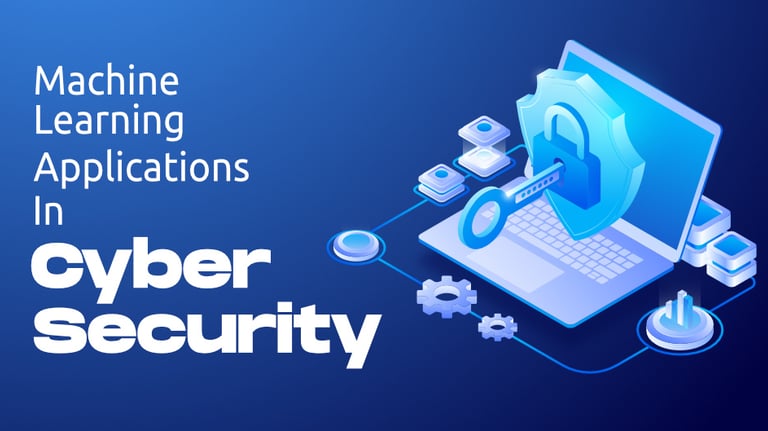
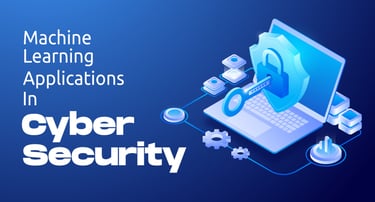
Cybersecurity – Machine Learning for Threat Detection and Response
This course is designed for cybersecurity professionals, IT managers, SOC analysts, and security architects who want to integrate machine learning into their security operations. Participants will develop core ML skills in anomaly detection, malware classification, and behavioral analytics to detect and mitigate threats faster and more accurately. The program covers supervised and unsupervised intrusion detection models, NLP techniques for phishing detection, and deep learning for network traffic analysis. Real-world case studies will explore automated incident response systems, insider threat prevention, and advanced threat intelligence, enabling participants to design and implement scalable, AI-driven cybersecurity strategies.
Day 1 – ML in Cybersecurity
Introduction to ML applications in cybersecurity; key data sources such as network logs, event data, and threat intelligence feeds; anomaly detection methods; and data preprocessing for security analytics.
Day 2 – Advanced Threat Detection Techniques
Building supervised and unsupervised intrusion detection systems; applying NLP to detect phishing attempts; implementing deep learning for malware and traffic classification.
Day 3 – AI-Driven Security Operations
Reviewing case studies in automated incident response, insider threat prevention, and real-time security monitoring; creating an ML-driven security operations plan tailored to organizational needs.
By the end of the course, participants can design, implement, and manage ML-based cybersecurity solutions that detect threats, prevent breaches, and automate incident response, improving organizational resilience against evolving cyber risks.
Smart Industrial AIoT for Real-Time Monitoring and Predictive Maintenance
The Industrial Internet of Things (IIoT) for Real-Time Monitoring & AI-Driven Preventive Alerts program is a two-day intensive training designed to equip participants with the knowledge and hands-on skills to design and implement IIoT systems integrated with artificial intelligence for enhanced operational efficiency. The course focuses on enabling real-time monitoring, predictive maintenance, and AI-powered early-warning alerts, applicable across multiple industries including manufacturing, agriculture, environmental monitoring, healthcare, and automotive.
Day 1 – Building the Backbone: IIoT Architecture, Sensors, and Data Intelligence Participants will explore IIoT architecture and protocols like MQTT, OPC UA, and Modbus, then practice deploying sensors for parameters such as temperature, humidity, vibration, and flow rate. They will also learn actuator control, data acquisition, edge processing, and networking via wired, wireless, and hybrid solutions.
Day 2 – From Monitoring to Action: AI-Driven Dashboards and Predictive Maintenance The focus is on building centralized dashboards for real-time control, developing AI-driven pre-alert systems, and integrating cloud-based AI/ML analytics for scalable decision-making. Participants will also cover IIoT cybersecurity and complete a group project designing an industry-specific monitoring solution with AI preventive alerts.
By the end of the course, participants will be able to apply IIoT architecture, deploy sensors and actuators, develop AI-enabled dashboards, and implement predictive maintenance with AI anomaly detection. They will also be ready to address real-world challenges, improving efficiency, reliability, and safety.


SMEs – Machine Learning for Business Growth and Efficiency
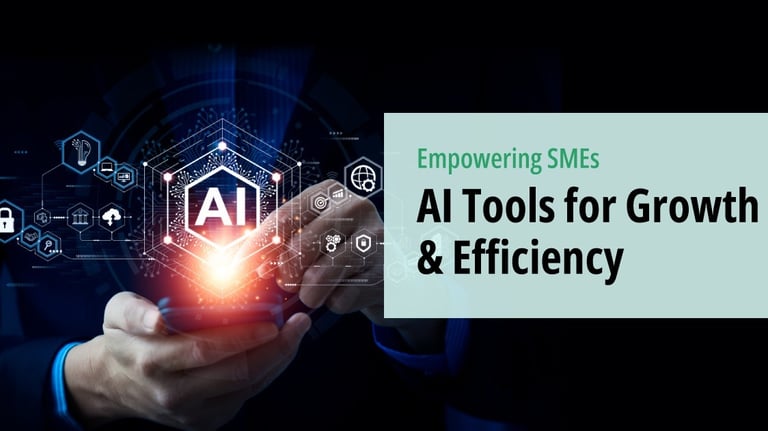
This program is aimed at SME owners, managers, and digital transformation teams who want to leverage machine learning for competitive advantage. Participants will build core ML skills in sales forecasting, customer segmentation, and operational optimization. They will explore predictive analytics for demand planning, NLP chatbots for customer service automation, and recommendation engines for cross-selling and upselling. SME-focused case studies will showcase AI-driven marketing optimization, automated financial analysis, and logistics planning, helping participants design cost-effective ML adoption strategies.
Day 1 – ML Fundamentals for SMEs
Introduction to ML in the SME context; identifying high-impact use cases; creating sales forecasting models and basic customer segmentation.
Day 2 – Optimizing Operations with AI
Applying predictive analytics for demand and inventory management; implementing NLP chatbots for customer support; developing recommendation systems for sales growth.
Day 3 – Practical ML Adoption in SMEs
Studying case examples in marketing, finance, and logistics; designing a cost-conscious ML roadmap for scaling AI initiatives in small to medium enterprises.
By the end of the course, participants can implement ML solutions that boost sales, improve customer engagement, streamline operations, and enhance decision-making, enabling SMEs to grow sustainably and compete effectively in the digital economy.